Danube Experts Tighten Course Toward New Ship Waste Rules
Informal Meeting of the Ship-Generated Waste Expert Group (25 February 2026)
River navigation is one of the most environmentally friendly transport modes — yet vessels inevitably generate waste. Managing it effectively is essential to protect the Danube’s ecosystem while ensuring safe, efficient navigation.
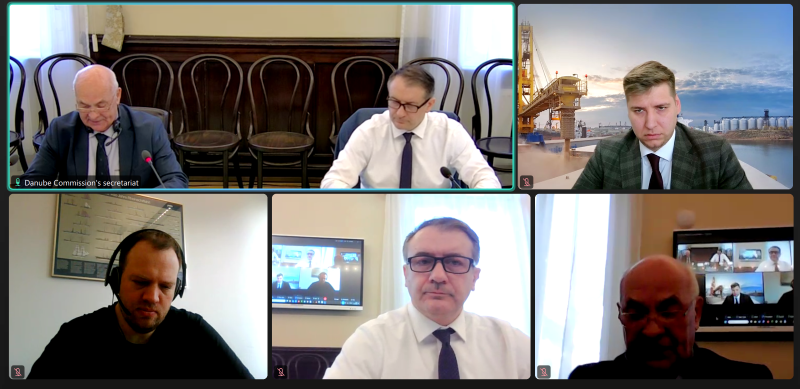
On 25 February 2026, more than 20 experts from Danube Commission (DC) Member States — Bulgaria, Croatia, Germany, Serbia, Hungary, Slovakia and Ukraine — met online to review the second updated Recommendations for Organising the Collection of Ship-Generated Waste in Danube Navigation (doc. DK/TAG 97/15) which provide technical and administrative guidance to Danube River Administrations. The informal expert meeting was chaired by Mr. Vladyslav Dolynskyi (Ukraine), with representatives of the CDNI, UNECE and the Sava Commission contributing actively.
“Our aim is to produce a technically perfect document that complies with all international documents and standards,” said representative of DC Secretariat.
The draft reflects Member States’ practical experience and aligns Danube rules with key European frameworks, including the CDNI system, the new TEN-T regulation, ES-QIN 2024/1, ADN 2025 and ES-TRIN 2025/1.
Discussions focused on terminology, structure and enforceability, with technical input from UNECE and CDNI experts. Participants also addressed the draft ISO standard ‘Ship-generated waste management and handling on inland waterway vessels’ (ISO/TC 8/SC 2), the planned 2027 introduction of an electronic used-oil log under CDNI, and alternative fuels — particularly HVO (Hydrotreated Vegetable Oil). Existing HVO provisions under Part A of the CDNI Implementation Regulation and the DC Recommendations will remain in force.
Additional written contributions are due by the end of March. Results will be presented to WG Tech on 13 May 2026. The next regular Expert Meeting on Ship-Generated Waste (EM Waste) will take place on 25 February 2027, with adoption of the final Recommendations foreseen in June 2027.
Chair Dolynskyi underlined the broader significance of the DC Recommendations:
“It’s important work for our environment, for our children, for our people, for our citizens. It’s big, important work.”