
EUSDR Annual Forum: “2026 must be the year we start to act jointly, targeted and decisively”
3 November 2026 | Sofia – Manfred Seitz, Director General of the Secretariat of the Danube Commission, participated as a speaker in the Smart Connectivity panel at the Annual Forum of the EU Strategy for the Danube Region (EUSDR). The Forum was organised by the Bulgarian 2026 EUSDR Presidency, and the panel was moderated by Robert Lichtner.
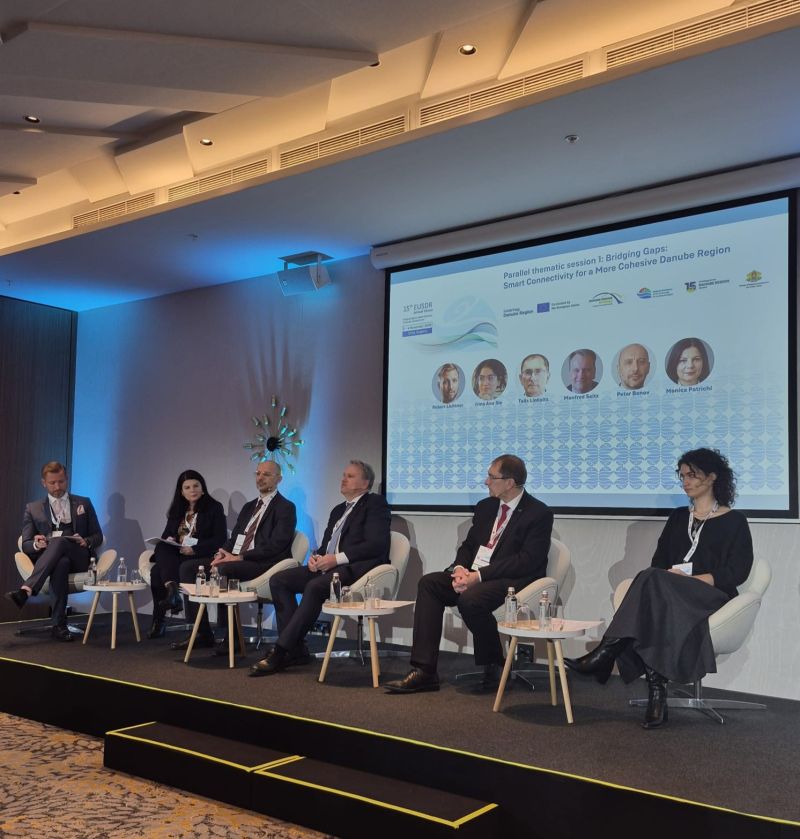
In his statement, Mr Seitz described the drought of 2026 as a turning point for Danube navigation: new historical minimum water levels recorded this autumn from Kelheim to Sulina recorded and Low Navigable Water Level not reached for half of 2026. In Danube ports, volumes fell by almost a third on the upper and middle Danube in Hungary and by a quarter in Ukraine, with loaded vessels having sailed with only 130 to 150 cm of draught. Measures for securing the cooling water for the nuclear power plant in Hungary have closed navigation at Paks since 13 August, in order to build a bottom sill. Paks shows how quickly climate stress turns into competing demand on the same water – and why a coordinated framework is needed, rather than isolated emergency responses. Danube Commission works closely with the Hungarian authorities to improve the design of the bottom sill in order to minimize its negative impact on navigability.
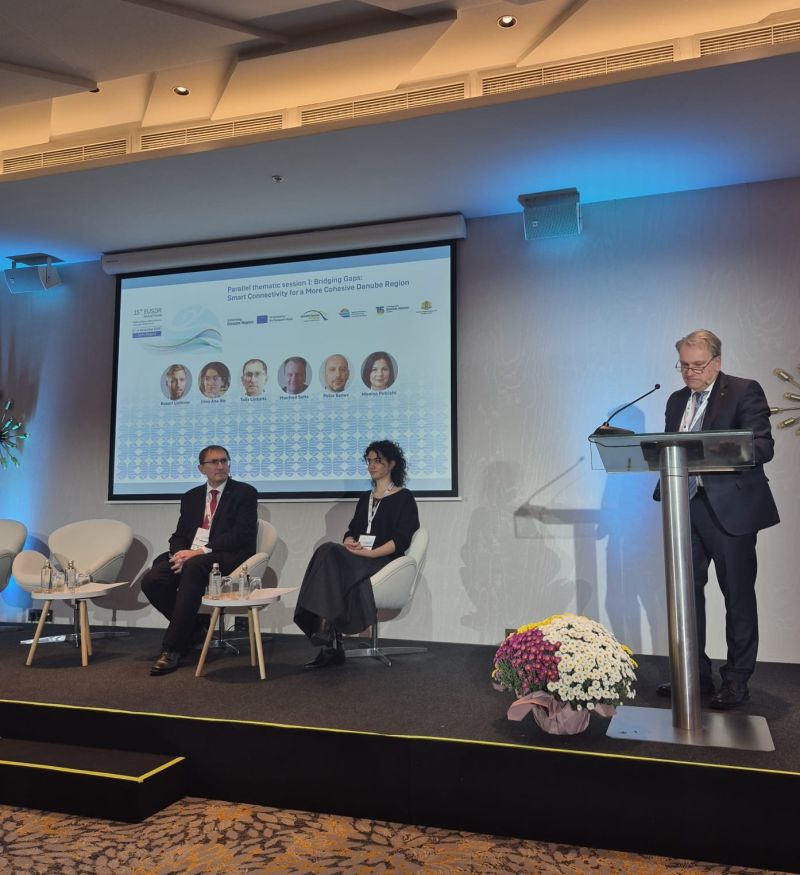
“The severe impact of climate change did not wait for 2050. It came in 2026, and it can come again at any time,” said Mr Seitz. Low water is no longer a late-summer phenomenon: it comes earlier, lasts longer – since mid-June, and with no relief – and is more severe.
He outlined three lines of response: removing critical bottlenecks year-round, pro-active and flexible fairway maintenance, and better information for operators and captains. The role of digital tools is also important, such as electronic navigational charts, recommended track, virtual AIS buoys, easily accessible real-time depth data and longer forecasting horizons.
The DC Secretariat will present a draft Action Plan for adapting Danube navigation to climate change in its Technical Working Group (10–12 November 2026). Mr Seitz envisaged that this plan would become the navigation component of the joint climate Action Plan called for by the EUSDR in its statement of 21 September 2026. The European Commission has welcomed the EUSDR statement and confirmed its readiness to take part in that work. As a first step, a joint meeting was proposed in early 2027 with EUSDR Priority Area 1a, the ICPDR and the EU Commission services.

Photo credits: DSP.